Reimagining Reality: Perception and Awareness in Limited Environments
In an age where space is both precious and precarious, understanding perception becomes not just beneficial but essential. For those navigating confined environments, whether by choice or circumstance, how we interpret our surroundings can redefine our experience entirely.
This exploration delves into the intricate dance between sensory input and cognitive processing that shapes our reality within limited spaces. It’s about discovering new ways to engage with the world when physical boundaries are at their most constraining.
The Science Behind Spatial Cognition
Spatial cognition operates through complex neural networks that integrate information from various senses. Visual cues form only part of this equation; auditory signals, tactile feedback, and even olfactory inputs contribute significantly to our sense of place.
Studies show that individuals who navigate small spaces frequently develop heightened sensitivity to subtle environmental changes. This adaptation allows them to detect shifts in temperature, sound reflections, or air currents that might go unnoticed by others.
- Vestibular system: Plays crucial role in balance and spatial orientation, especially vital in cramped quarters
- Mirror neurons: Help simulate experiences without direct interaction, useful for mental mapping of restricted areas
Neuroplasticity enables the brain to rewire itself based on repeated exposure to constrained environments. Over time, people accustomed to tight spaces often exhibit enhanced spatial memory capabilities compared to those in open settings.
Research indicates that frequent users of compact living arrangements demonstrate improved ability to mentally visualize three-dimensional layouts from two-dimensional perspectives.
Designing for Enhanced Awareness
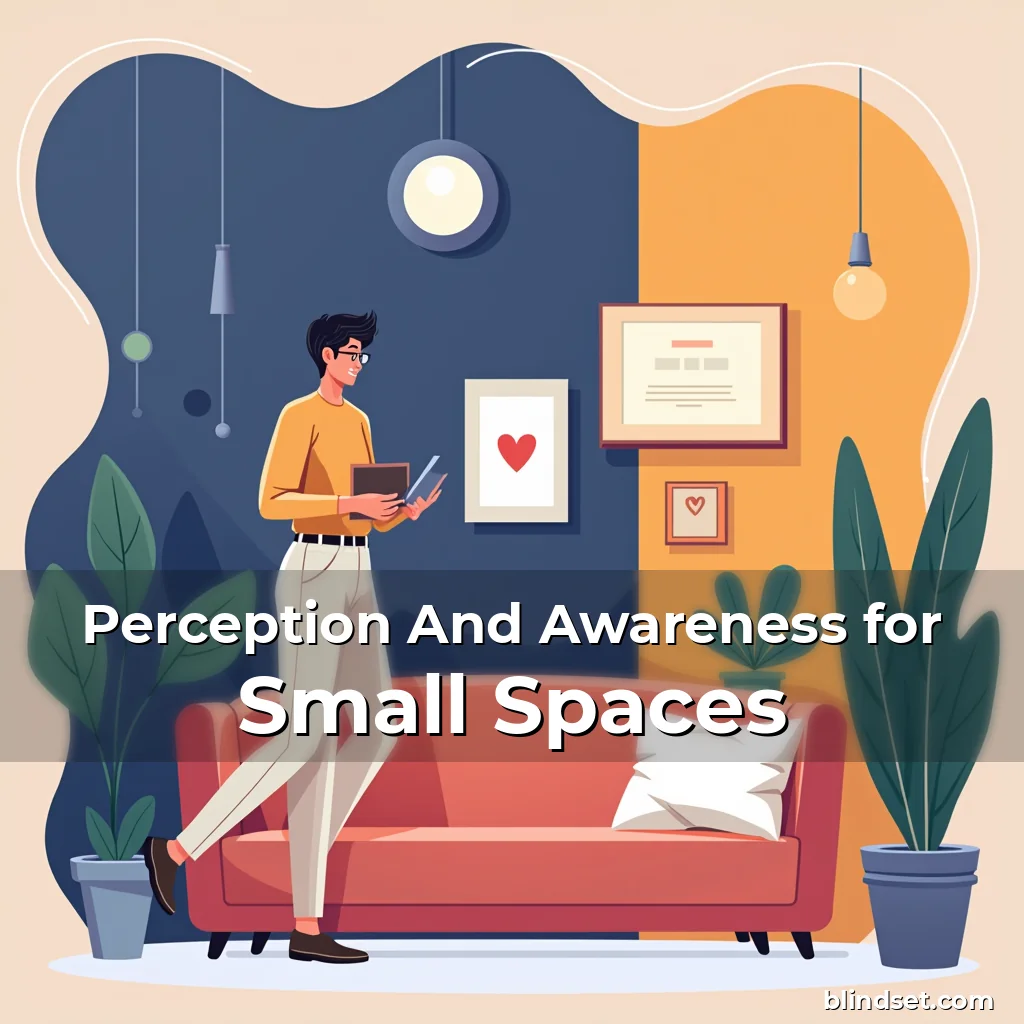
Architectural design plays a pivotal role in shaping perceptual experiences within limited spaces. Thoughtful use of color, texture, and lighting can transform restrictive environments into stimulating ones.
Contrast in flooring materials helps define different functional zones within small areas. Strategic placement of mirrors creates illusion of expanded space while maintaining practicality.
Lighting Strategies
Proper illumination affects not only visibility but also psychological well-being. Layered lighting systems allow occupants to adjust brightness according to activity needs without overstimulation.
Warm white light enhances feelings of coziness in intimate settings, whereas cooler tones increase alertness during work hours. Motion-sensor lights provide safety without constant energy consumption.
A study published in Environmental Psychology found that dynamic lighting systems reduced perceived crowding by up to 38% in shared living spaces.
Cognitive Mapping Techniques
Developing internal maps of unfamiliar environments requires deliberate practice. People who regularly move through changing spatial configurations benefit from structured navigation strategies.
Landmark-based orientation involves identifying key reference points that help maintain directional awareness. These could be architectural features, furniture placements, or recurring patterns in the environment.
Path integration relies on tracking movement relative to starting position. This technique works particularly well in linear corridors or repetitive layouts common in many urban dwellings.
Combining these methods with periodic recalibration ensures accurate spatial representation despite potential disorientation in confined settings.
Technological Aids for Spatial Navigation
Modern technology offers innovative solutions for enhancing awareness in restricted spaces. From smart sensors to augmented reality interfaces, tools continue evolving to meet diverse needs.
Ultrasound-based positioning systems track location with millimeter precision, enabling precise wayfinding in complex environments. These systems work seamlessly with mobile devices and wearable tech.
Augmented reality overlays digital information onto real-world views, helping users better understand spatial relationships. This proves especially helpful in crowded public transport scenarios.
Haptic feedback devices translate spatial data into vibrations, providing alternative means of navigation for visually impaired individuals. These technologies complement rather than replace traditional orientation skills.
Sensory Integration for Better Perception
Multi-sensory environments enhance overall situational awareness. Engaging multiple senses simultaneously improves depth perception and object recognition in tight quarters.
Tactile markers placed along pathways offer non-visual guidance options. Different textures indicate direction changes, stairs, or doorways without relying solely on sight.
Olfactory cues can serve as environmental indicators. Specific scents associated with particular rooms aid recall and orientation, creating subconscious navigational aids.
Kinesthetic awareness develops through regular movement patterns. Familiar routines build muscle memory that supports intuitive navigation in confined spaces.
Psychological Aspects of Constricted Living
Prolonged residence in limited spaces influences emotional states and behavioral patterns. Understanding these effects helps create healthier living conditions for everyone involved.
Increased proximity fosters stronger social bonds but may also lead to privacy concerns. Balancing intimacy with personal space remains critical for long-term well-being.
Environmental stressors accumulate faster in smaller areas. Noise pollution, lack of natural light, and restricted airflow become more pronounced issues requiring attention.
Studies suggest that residents of micro-apartments report higher levels of mindfulness and present-moment awareness due to increased need for intentional engagement with surroundings.
Fostering Community Through Shared Spaces
Communal areas designed thoughtfully can mitigate negative aspects of confined living while promoting social connections. Well-planned shared spaces encourage positive interactions without compromising individual needs.
Flexible furniture arrangements support varied usage patterns. Modular seating and movable partitions adapt easily to different group sizes and activities.
Common areas equipped with sound-absorbing materials reduce noise conflicts. Strategic placement of greenery improves mood and reduces stress levels among residents.
Shared amenities like co-working spaces or communal kitchens foster collaboration and resource sharing, turning limitations into opportunities for innovation.
Future Directions in Spatial Awareness
Ongoing research explores novel approaches to improving human-environment interaction within constrained settings. Emerging fields combine neuroscience with architecture to create more responsive living spaces.
Biofeedback systems monitor physiological responses to spatial stimuli, allowing personalized adjustments to environmental factors. These adaptive systems promise greater comfort and efficiency in future designs.
Advances in material science enable creation of surfaces that change properties based on occupancy patterns. Responsive textiles and shape-memory alloys offer exciting possibilities for interactive interiors.
Collaborative efforts between designers, psychologists, and technologists will likely yield groundbreaking innovations that redefine what’s possible within any given square footage.
Conclusion
Understanding perception and awareness within limited spaces reveals new dimensions of human capability and resilience. The interplay between biology, psychology, and design opens doors to creative problem-solving.
By embracing these principles, we gain powerful tools for transforming constraints into catalysts for growth. Whether designing homes, workplaces, or public spaces, conscious application of these insights leads to richer, more meaningful experiences.

news is a contributor at BlindSet. We are committed to providing well-researched, accurate, and valuable content to our readers.