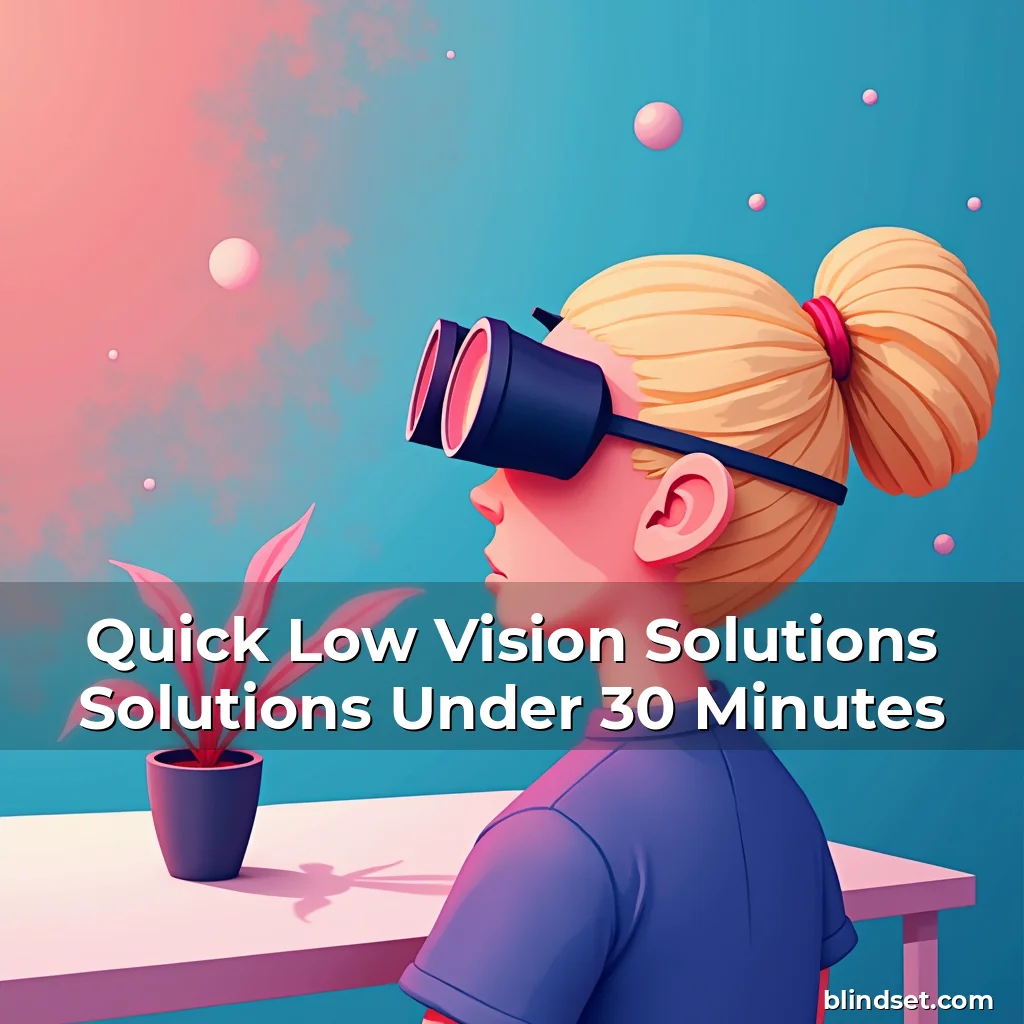
Quick Low Vision Solutions Solutions Under 30 Minutes
The world of low vision assistance is rapidly evolving, offering innovative tools and strategies tailored specifically for individuals experiencing visual impairment. Whether you’re part of the blindset community or simply curious about accessible technology, understanding available options can transform daily life. From adaptive devices to digital enhancements, there are countless ways to navigate challenges effectively.
This guide explores practical, immediate solutions designed to empower users with low vision. These methods range from simple adjustments to cutting-edge technologies, ensuring that everyone finds something suitable regardless of their level of visual acuity. By focusing on quick implementation steps, we aim to deliver tangible benefits within minutes of application.
Understanding Low Vision Challenges
Low vision refers to significant visual impairment that cannot be corrected with standard eyeglasses, contact lenses, or surgery. It affects millions worldwide and presents diverse obstacles depending on individual conditions. Common symptoms include reduced contrast sensitivity, limited peripheral vision, and difficulty recognizing faces or reading print.
These limitations often lead to frustration and isolation, particularly when navigating everyday tasks like cooking, shopping, or using electronic devices. Recognizing how these issues impact daily routines helps identify targeted interventions that restore independence and confidence.
- Reduced Contrast Sensitivity: Individuals may struggle distinguishing objects against similar backgrounds due to diminished ability to perceive color differences.
- Limited Peripheral Vision: Narrow field of view restricts awareness of surroundings, increasing risk during activities requiring spatial orientation.
Technological Aids for Enhanced Accessibility
Modern technology offers powerful tools to mitigate low vision challenges. Screen readers, magnification software, and smart glasses represent some of the most effective solutions currently available. These innovations enable users to engage fully with digital environments despite visual restrictions.
Smartphone applications play a pivotal role in enhancing accessibility. Features like voice commands allow hands-free operation, while built-in screen readers convert text into audio descriptions. Customizable settings ensure compatibility across various platforms and devices.
Digital Magnifiers and Text-to-Speech Tools
Text-to-speech technology converts written material into spoken words, allowing access to books, emails, and web pages without relying on sight. Integrated into operating systems and standalone apps alike, this feature supports both casual reading and professional documentation review.
Digital magnifiers function similarly to traditional optical instruments but offer greater flexibility. They permit zooming in on images, adjusting brightness levels, and changing color contrasts—all adjustable via intuitive interfaces. Many modern smartphones come equipped with basic versions of these capabilities out-of-the-box.
Adaptive Devices Designed Specifically For Visual Impairments
Beyond digital solutions lie specialized physical gadgets engineered explicitly for visually impaired individuals. Braille displays, tactile markers, and high-contrast labeling systems exemplify creative approaches aimed at improving usability through touch-based interactions.
Braille devices remain essential for those who prefer tactile reading experiences. These machines translate electronic texts into raised dots readable by fingertips, facilitating communication independent of auditory cues alone. Portable variants exist alongside larger desktop models suited for different lifestyles.
- Tactile Markers: Used extensively in public spaces, they alert pedestrians to potential hazards such as stairs or curbs through distinct textures beneath shoes.
- High-Contrast Labels: Employed on household appliances and medication containers, these labels enhance visibility against background surfaces by utilizing starkly differing colors.
Training Programs That Empower Independent Living
Comprehensive education remains critical in maximizing benefit from assistive technologies. Training sessions typically focus on mastering device functionalities, interpreting sensory feedback accurately, and developing new skills compensating for lost visual abilities.
Many organizations provide free workshops covering everything from smartphone navigation to safe travel techniques. Participants learn how best leverage existing resources while gaining insight into emerging trends shaping future developments in this space.
Cognitive Rehabilitation Techniques
Cognitive rehabilitation involves exercises strengthening memory recall, spatial perception, and problem-solving capacities affected indirectly by prolonged exposure to low vision scenarios. Therapists employ personalized regimens targeting areas needing improvement based on patient assessments.
Activities might involve memorizing routes around neighborhoods, identifying familiar sounds associated with specific locations, or practicing mental imagery related to object shapes and sizes. Over time, consistent engagement fosters resilience against cognitive decline linked closely with chronic visual impairment.
Legal Rights And Advocacy Efforts Supporting Visually Impaired Individuals
Familiarity with relevant legislation ensures fair treatment across employment opportunities, housing arrangements, and public services. Laws mandating reasonable accommodations protect rights while promoting inclusivity throughout society at large.
Advocacy groups work tirelessly to influence policy changes favoring better integration policies. Their efforts encompass lobbying government bodies, raising awareness among employers, and educating communities about disability etiquette practices.
- Americans With Disabilities Act (ADA): Requires businesses providing goods/services to accommodate clients with disabilities reasonably unless doing so imposes undue hardship upon operations.
- Workplace Protections: Mandates equal hiring practices; prohibits discrimination based solely on perceived or actual impairments affecting job performance capabilities.
Community Support Systems Available Locally And Globally
Local chapters affiliated with national associations serve as hubs connecting members seeking peer guidance, volunteer mentors, or group outings fostering social inclusion. Online forums extend reach beyond geographical boundaries enabling global participation anytime day-night cycle.
Volunteer networks facilitate mentorship programs pairing experienced advocates with newcomers learning self-advocacy tactics. Mentors share personal journeys illustrating successful adaptation processes applicable broadly irrespective of cultural contexts.
Peer Mentorship Benefits
Mentorship relationships significantly boost morale among participants dealing simultaneously with emotional adjustment phases accompanying sudden loss/gain of sight functions. Emotional validation comes naturally through shared struggles creating bonds stronger than mere acquaintanceships.
Structured mentoring frameworks outline clear expectations regarding frequency/duration of meetings plus goals achievable collaboratively over agreed timelines. Such organization prevents ambiguity causing confusion later stages post initiation phase completion.
Future Innovations Shaping Tomorrow’s Low Vision Technologies
Ongoing research promises groundbreaking advancements poised to revolutionize current paradigms surrounding visual impairment management. Emerging fields like artificial intelligence integration, neural implants, and bioengineered retinal prosthetics hint toward possibilities once considered science fiction narratives.
AI-driven analytics now predict optimal lighting configurations automatically adapting workspace environments dynamically according to real-time user behavior patterns observed consistently across varied situations encountered regularly.
- Neural Implants: Experimental prototypes stimulate damaged optic nerves electrically restoring partial sight functionality previously deemed irrecoverable following degenerative diseases progression.
- Bioengineered Retinas: Scientists cultivate photoreceptor cells capable replacing dead tissue thereby rejuvenating eyesight progressively over months rather than years required traditionally for surgical restoration procedures.
Practical Tips For Implementing Quick Fixes Today
Immediate action yields noticeable improvements even before long-term investments pay off financially. Simple modifications involving lighting setups, furniture rearrangements, and organizational habits contribute substantially towards easing transitions smoothly during early adoption periods.
Lighting plays crucial role influencing overall visibility effectiveness. Soft ambient illumination combined strategically placed task lights minimizes glare risks whereas harsh overhead bulbs create shadows obscuring fine details difficult discerning otherwise.
- Use High-Lumen Task Lighting: Direct light sources illuminate focal points brightly without casting distracting reflections onto nearby reflective surfaces.
- Install Motion Sensor Lights: Automatically activate upon detecting movement reducing manual interaction demands especially beneficial during nighttime hours.
Conclusion
In conclusion, numerous viable avenues exist addressing low vision concerns comprehensively. From readily available tech accessories to immersive training modules, every solution contributes uniquely toward achieving desired outcomes aligned personally defined success metrics.
To begin reaping benefits instantly, prioritize implementing straightforward measures discussed earlier today. As progress continues unfolding continuously, staying informed guarantees timely utilization whenever novel discoveries emerge impacting quality of life positively going forward permanently.

news is a contributor at BlindSet. We are committed to providing well-researched, accurate, and valuable content to our readers.